Things to Do in Phuket
Andaman salt, tin-town alleys, and noodles worth skipping the beach for
Top Things to Do in Phuket
Find activities and tours you'll actually want to do. Book through our partners -- no booking fees.


Plan Your Trip
Essential guides for timing and budgeting
Climate Guide
Best times to visit based on weather and events
View guide →Day Trips
The best excursions and nearby destinations worth the journey
Explore day trips →Where to Stay
Best neighbourhoods, hotel picks, and booking tips
Find hotels →Travel Insurance
What's required, what coverage matters, and how to get a quote
Read guide →What to Pack
Climate-specific gear, essentials, and what to leave at home
See packing list →When Should You Visit Phuket?
Tap a month for weather, crowds, and highlights
View full year-round climate guide →Explore Phuket


Your Guide to Phuket
About Phuket
The Andaman Sea off Phuket is the color of green glass held up to sunlight. The first time you see it from the cliff road winding down to Nai Harn, you understand why this island charges what it does. Phuket is Thailand's largest island, roughly the size of Singapore, and it carries the same contradictions at the same scale.
Patong Beach, on the central west coast, runs three kilometers of sand backed by a neon strip. Go-go bars and tailored-suit shops fight for the same frontage. The bass from Bangla Road's clubs thumps through the sticky air until the monks begin their morning rounds. Drive twenty minutes south and you're in Rawai. Long-tail boats still unload the morning catch onto concrete docks.
The waterfront restaurants grill whatever came in over coconut-husk charcoal. The smoke hangs low and sweet in the humid air. The real surprise is Phuket Old Town, on the quieter eastern side. A century of tin-mining wealth built rows of Sino-Portuguese shophouses along Thalang Road and Soi Romanee. Their facades crumble in pastels of mint and coral and turmeric yellow.
They now hold independent coffee roasters, galleries, and noodle shops. These serve bowls of Hokkien mee braised in a pork-and-soy stock so dark it stains the thick yellow noodles almost black. Pickled greens finish the dish, sharp enough to cut through the richness. The trade-off is honest. This is not the Thailand of quiet temples and empty rice paddies.
High season packs the west coast hard enough to make Freedom Beach feel like a public pool. The southwest monsoon between May and October turns the Andaman from postcard turquoise to bruised gray. Red flags fly on every beach. But the island earns its reputation where it counts, in the water and the kitchen. The gap between what Phuket delivers and what it costs remains, for the moment, one of the more generous ratios in Southeast Asia.
Travel Tips
Transportation: Download the Grab app before you land at Phuket International. It is the single most useful thing you can do for your wallet on this island. Tuk-tuk drivers at the airport quote rates three to four times what the same journey costs through Grab. Negotiating when you are jet-lagged is a losing game. For beach-hopping along the west coast, the songthaew, open-backed blue trucks running fixed routes between Phuket Town and the major beaches, cost a fraction of a private ride. They run until early evening. Scooter rental is tempting, but Phuket's hill roads are steep and poorly lit after dark. Tourist travel insurance almost never covers motorbike accidents. Stick to four wheels unless you ride regularly at home.
Money: Thailand runs on cash more than you would expect from a country this wired. Street stalls, market vendors, and songthaew drivers take baht notes only. Keep small bills on you at all times. ATMs are everywhere but nearly all tack on a flat foreign-card surcharge on top of whatever your own bank charges. Each withdrawal becomes surprisingly costly for a few notes. Exchange booths in Phuket Town, along Phang Nga Road, offer notably better rates than the airport or hotel counters. Cards work at malls, chain restaurants, and hotels without issue. One trick worth knowing: 7-Elevens across the island accept contactless payment. Your phone handles the late-night water run.
Cultural Respect: Phuket's temples, Wat Chalong in the south and the Big Buddha statue overlooking Chalong Bay, enforce dress codes that are not suggestions. Shoulders and knees must be covered. Shoes come off at the door. Pointing your feet toward a Buddha image is considered offensive. If a monk passes you on the sidewalk, step aside. Women should avoid all physical contact, including accidentally brushing against robes on a crowded songthaew. The Thai monarchy is protected by lese-majeste laws that carry real prison sentences. This is not a topic for casual jokes or social media commentary, even among other tourists. A wai, the palms-together greeting, offered to elders and service staff earns genuine warmth that tips alone do not.
Food Safety: Phuket's food identity is southern Thai crossed with Hokkien Chinese. The best of it lives in Old Town, not on the beach strip. Hokkien mee, the island's signature dish, is thick yellow noodles braised for hours in a stock of pork, squid, and dark soy until they turn nearly black. You will likely not find this anywhere else in Thailand. Oh tao, a crispy oyster omelette with beansprouts and a chili-vinegar dip, is a close second. Eat where the turnover is fast and the wok fires to order. Street stalls with long queues and quick-moving lines are consistently safer bets. Half-empty tourist restaurants reheating yesterday's curry are not. Factory-made ice, the tubular kind with a hole through the center, is standard across the island and safe.
When to Visit
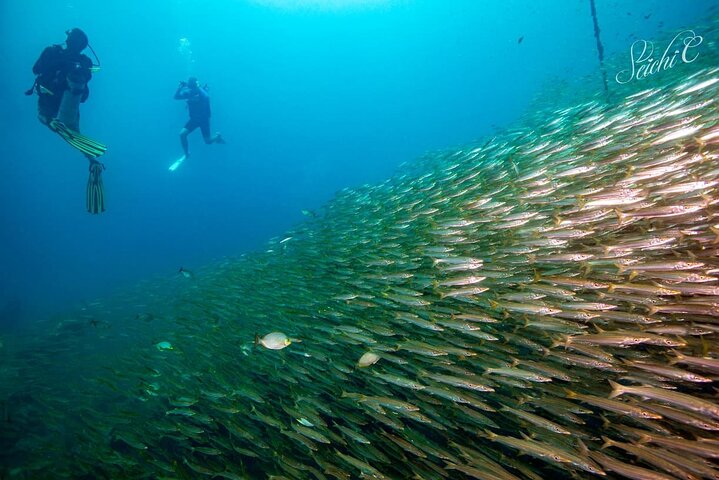
Phuket's weather divides into two clear seasons. Pick the wrong one and your trip shifts entirely. November through April is dry season. The Andaman earns its postcards then. Flat calm water. Coral visible from the surface on Similan Islands day trips. Humidity stays manageable, not hostile. December to February is the sweet spot.
Daytime temperatures hover at 30 to 32 degrees Celsius (86 to 90 Fahrenheit). Rain almost never falls. The catch is obvious. Every traveler on earth marks the same calendar. West coast beaches from Patong to Kata fill early. Restaurant waits in Old Town stretch past an hour. Accommodation prices climb to their annual peak.
Choose November or late March instead. You get nearly identical weather. Crowds thin noticeably. Room and flight rates drop meaningfully.
The southwest monsoon lands in May. It does not release its grip until October. Afternoon downpours arrive daily. Sometimes they turn Patong's sois into ankle-deep streams. The Andaman shifts from turquoise to moody slate gray. Red flags rise along the west coast for dangerous undertow. Several island day-trip operators shut down entirely.
The monsoon-fearful crowd misses the upside. Mornings stay clear and warm. Rain rarely lasts more than two hours. Phuket's interior roars. Waterfalls at Bang Pae and Ton Sai in Khao Phra Thaeo National Park run at full force beneath dripping jungle canopy. Hotel rates fall dramatically. Restaurants that demanded reservations in January now greet walk-ins with visible relief.
Do not ignore the transitional months. October still dumps heavy rain. Rates, however, begin climbing as operators sense the season turning. April is technically dry. Heat spikes to 34 or 35 degrees Celsius (93 to 95 Fahrenheit). Humidity thickens so much that a short walk leaves you soaked. Time your visit around events.
The Vegetarian Festival in late September or early October transforms Old Town. A week of street processions develops. Devotees walk across glowing coals. Inventive plant-based Thai-Chinese cooking appears. You will not find these dishes anywhere else. Incense clouds the air. Firecrackers crack against shophouse walls.
Songkran in mid-April turns the island into a three-day water fight. Loy Krathong in November releases thousands of lotus-shaped floats carrying candles onto still water. Phuket sits at the start of its best weather then. Build your trip around it if the dates align.
More Ways to Experience Phuket
Tours, day trips, and local experiences curated by on-the-ground operators.
Didn't see anything interesting yet?
Browse Viator's full catalog of tours, day trips, food experiences, and private guides in Phuket.
See All Phuket Tours on Viator